

The Sense-Shape-Steer Framework
Workbook and Video Walkthrough

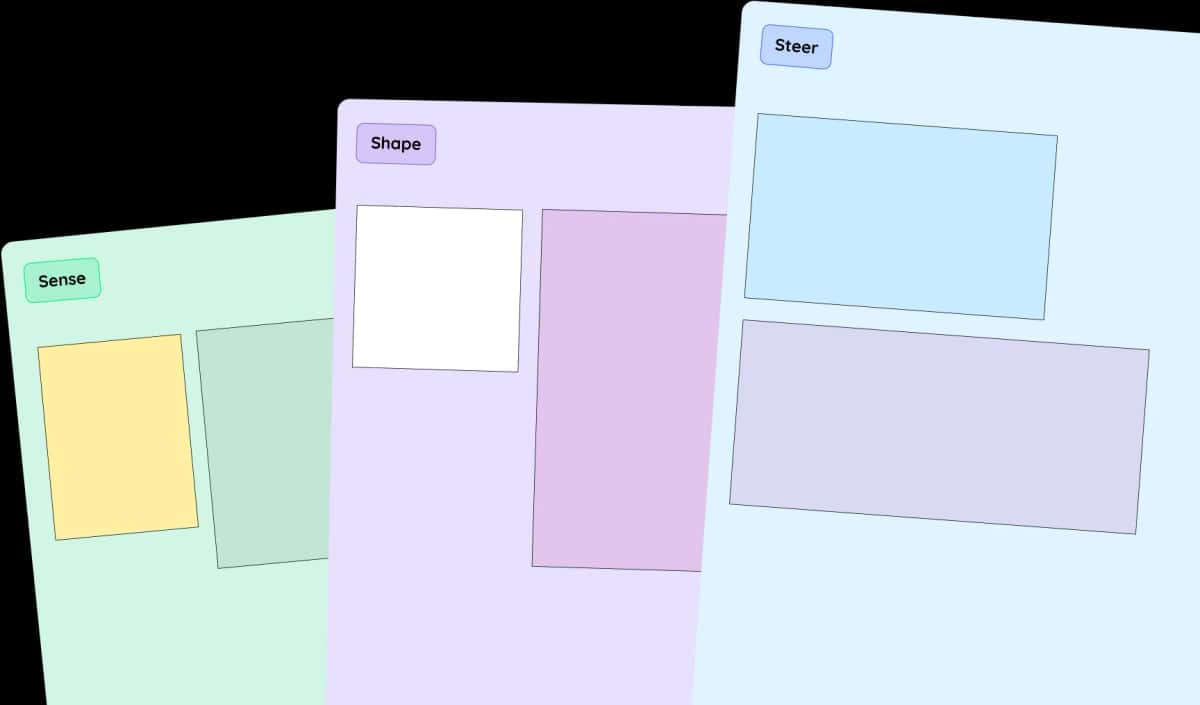
The Sense-Shape-Steer Workbook
Access the Full Figjam
Introducing A Closed-loop Approach To Creating AI Products That Keep Improving After Launch
See it in Action
We’ve turned Sense-Shape-Steer into a 5-day sprint
with structured prompts, exercises and decision
frameworks.

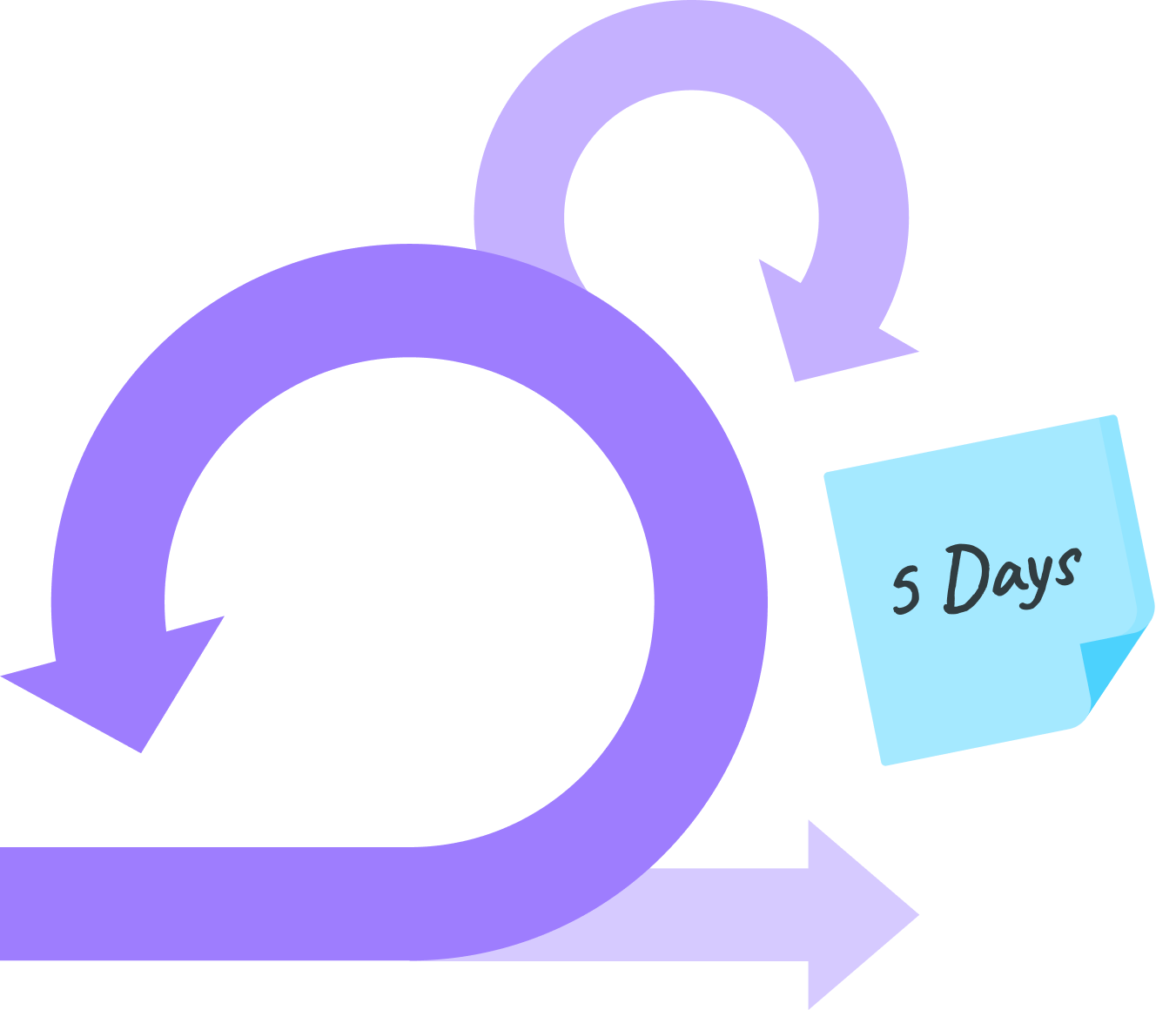
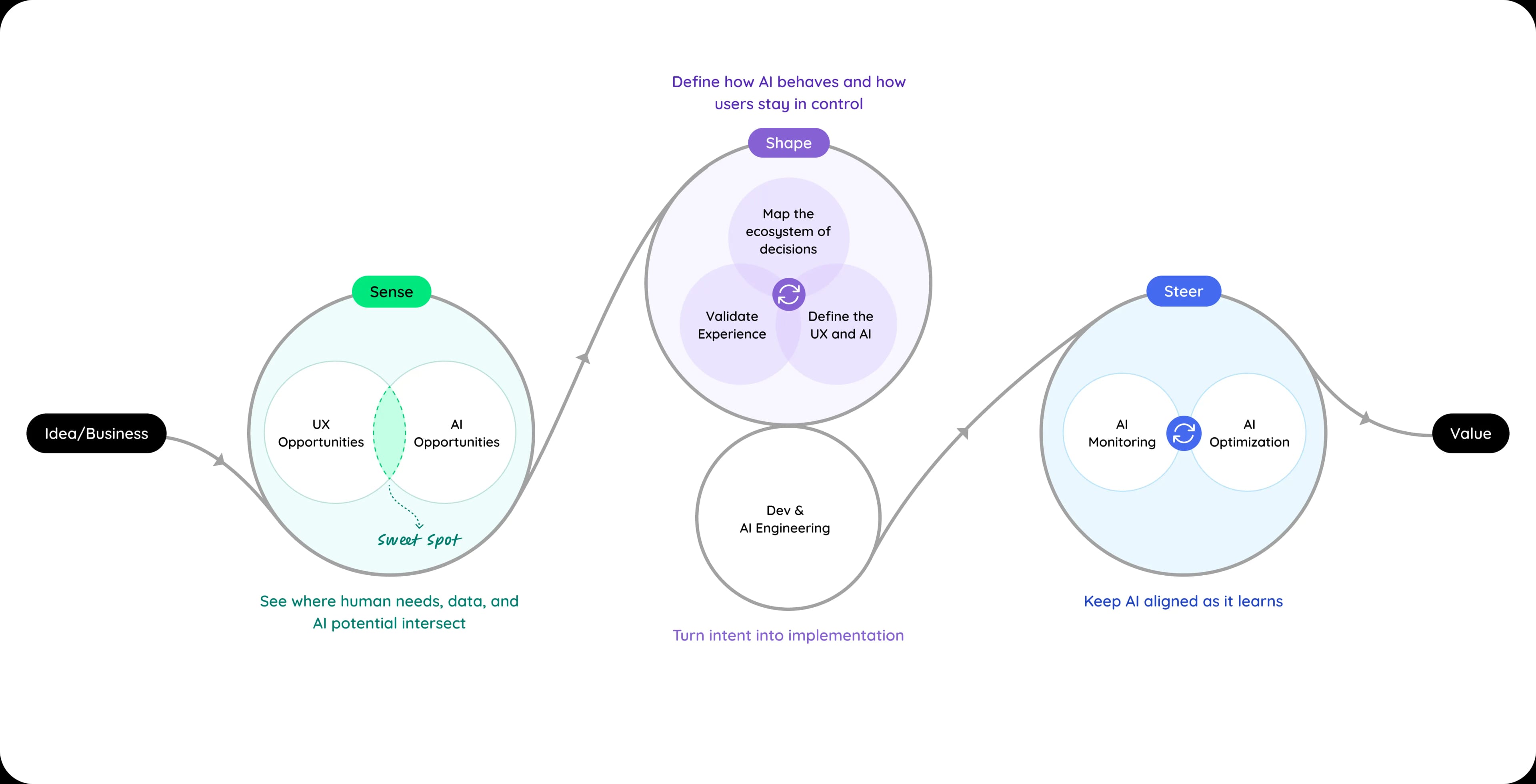
From sensing opportunities to shaping behavior and steering real-world performance, every cycle brings the system — and the experience — closer to its intent.
The three phases include: Understanding where AI can enhance the UX (Sense). Designing how the AI should behave (Shape). Governing and evolving the experience (Steer). Each phase informs the others. The cycle repeats as your product evolves.
SENSE
Before we design, we listen
(to users, data and context)
When you come to us with an AI application — whether it's an agent, copilot, chatbot, or decision support system — you typically know (or strongly suspect) AI is the right approach. Our job is to help you discover how to do it right.
This is highly collaborative. Your team knows the domain, business constraints and data realities. We bring structured research methods and pattern recognition from designing AI across healthcare products. ”Sense” is all about laying out all the pieces —constraints, capabilities, autonomy levels — so when we move to Shape, we know what we’re working with.
Discover the UX Opportunity
Understanding the human problem and workflows
Before we jump into models or data, we start with people.
We dig into how work actually happens today — where effort piles up, what slows users down, and what success really looks like from their side.
We map Jobs-To-Be-Done to surface the tasks your users need to accomplish:

Identify friction patterns: information overload, manual work, personalization gaps, adoption barriers, cross-system fragmentation, expertise that doesn't scale
You're in the room as we synthesize findings on Miro boards in real-time
Your product team sees patterns emerging
In a working session, we score opportunities across:
Business impact: What moves the needle on efficiency, cost, or revenue?
User trust: Where does AI intervention feel natural vs. intrusive?
Technical feasibility: What can be built realistically with your data and current architecture?
This shared scoring helps teams see where AI will have the most meaningful impact — and ensures everyone’s aligned on why a particular direction is worth pursuing.
Discover the AI Opportunity
Understanding what's technically possible and what constrains it
Understanding what’s technically possible is just as critical as understanding user needs. Here, we explore the boundaries and potential of your AI — what it can do today, what might still be science fiction, and what trade-offs come with each path.
We look under the hood to understand the AI itself — how it learns, where it struggles, and what it needs from your data to deliver consistent value.
Model capabilities:
What can the existing AI model(s) do vs. what's still science fiction?
Architecture options: Thin LLM wrapper? Fine-tuned model? RAG-based? Custom training?
Data infrastructure: What ground truth exists? Is it accessible? Where are data gaps and bias issues?
Technical and cost integration points:
What existing systems AI gets access to?
Are the computational costs scalable?
Risk and expectations:
What level of accuracy is acceptable? What happens when the AI is wrong?
What is projected CAIR ?
This determines confidence levels, what you can promise users, and what constraints shape the experience.
By the end of Sense, we’ve connected the dots between what users need and what AI can reliably deliver. We now know where AI fits best, what risks it carries, and what kind of experience it should enable.
Next, we bring it all together — designing how the AI should behave, interact, and earn trust in Shape.
SHAPE
Once we understand, we design
(to define how AI behaves and how users interact with it)
This is where ideas take form.
We define how the AI should act, respond, and communicate — when it should take initiative, when it should pause, and how it should earn the user’s trust.
We explore the balance between autonomy and oversight, shaping tone, visibility, and control so the AI feels powerful yet predictable.
Here, design moves fast — we prototype AI-driven interactions that mimic real model behavior, then refine them through iterative, AI-specific testing.
Each round helps us understand not just what works, but why users trust it (or don’t).
Map the Ecosystem of Decisions
Understanding how AI fits into real workflows — and where humans must continue to lead
We start by mapping how work actually happens: who decides what, when, and with which information.
This reveals where AI can assist, automate, or amplify human judgment — and where it shouldn’t interfere.
Trace decision flows
Who needs what information, when, to make which choices?
Which moments are repetitive, data-heavy, or delay-prone (ideal for AI)?
Which require context, empathy, or expertise (best left human-led)?
Define autonomy boundaries
Low-risk: High AI autonomy with light human oversight
Medium-risk: AI suggests, human approves
High-risk: Low AI autonomy, high human control
Surface data trust gaps
Where data quality, latency, or coverage undermines confidence
Map AI into workflows
We visualize where AI adds clarity or speed — when it listens, recommends, summarizes, or acts — and how these moments connect to user intent.
Design interaction logic
Through prompt and context engineering, we define how AI understands intent, applies knowledge, and communicates tone and confidence.
We outline when it acts autonomously, when it pauses for input, and how it explains uncertainty.
Design feedback loops
Define how the AI will learn from users — what signals it collects (edits, confirmations, rejections), how those signals feed the model, and where human review is required.
These behavior blueprints guide early AI prototypes, where we simulate model behavior to explore how humans and AI share decisions in context.
Validate Experience
Testing usefulness and trust before engineering builds the real thing
Traditional mock-ups can’t capture how AI behaves in motion — how it reasons, hesitates, or learns from users.
We mimic AI behavior through simulated workflows that approximate real model reasoning and responses.
Why static mock-ups fail for AI

Can’t show how AI handles unexpected inputs
Can’t reveal if users understand its reasoning
Can’t test tolerance for mistakes
Can’t demonstrate confidence variation
What we do instead
AI workflow prototypes: Mimic AI reasoning, tone, and confidence — even before the model is live
Wizard-of-Oz testing: Simulate AI to study real reactions without full engineering effort
Failure mode testing: Expose low-confidence or incorrect responses to understand recovery expectations
Trust testing: Test if users grasp why AI suggested something and feel confident acting on it
Autonomy testing: Find the right balance between AI initiative and human oversight
Feedback loops
We test how users respond to AI suggestions — what they correct, reject, or confirm — and whether these signals can drive meaningful learning.
Each iteration helps us refine prompts, context, and weighting so that user feedback becomes structured, useful input for the system to improve itself.
By the end of Shape, the AI’s role, tone, and reasoning model are clearly defined and validated — forming the behavioral blueprint for a trustworthy, human-centered AI experience.
Design doesn’t end when AI goes live — that’s when it truly begins to learn.
In Steer, we stay alongside it, watching how real users shape its behavior, how confidence grows, and where trust gets tested.
This is where we make sure the intelligence we designed continues to feel human.
STEER
As intelligence grows, we steer
(to help it stay useful, transparent, and trusted)
AI keeps learning — and so must design.
In Steer, we stay close to how AI behaves in the real world — not to control it, but to guide it.
We observe how it performs, where it hesitates, and how people respond.
Each insight helps the experience grow wiser, fairer, and more reliable as the AI matures.
Steer isn’t about maintenance — it’s about governance through awareness.
We establish the guardrails that keep human accountability visible: how the AI decides, when it escalates, and who’s in control when confidence drops.
It’s how we keep AI trustworthy, not just functional.
Embedded Support
Bringing design intent to life — and keeping it alive.
When ideas move from design to build, intent can get diluted.
We stay embedded with engineering teams to make sure what we designed — clarity, empathy, and confidence — stays intact as AI becomes operational.
Join stand-ups, reviews, and pairing sessions to keep user experience tied to implementation decisions
Collaborate on prompt and context refinement to ensure AI responses align with design intent
Run early feedback cycles with real or simulated users to catch drift between designed and actual behavior
Define shared success metrics — confidence, accuracy, explainability, trust — so everyone measures the same outcomes
We don’t just hand over specs — we help shape how design and AI evolve together.
Measure & Iterate
Improving accuracy, reliability, and trust through continuous feedback
As AI meets real-world use, our focus shifts from designing the behavior to guiding it.
We observe how it performs, learns, and adapts—then tune the experience to stay accurate, dependable, and human-aligned.
That’s the essence of Steer: learning in motion.
Observe real interactions to see where AI helps, hinders, or confuses
Refine thresholds, tone, and messaging as confidence grows or falters
Track how new data affects accuracy and model behavior — because as data changes, so does the experience
Watch how user feedback influences the AI’s learning — what it picks up automatically and what still needs human review
Keep learning safe and intentional — adjust how often the AI learns from feedback and how much human oversight is built in
Evolve communication to explain reasoning and uncertainty more clearly
Monitor for bias, drift, and adoption patterns to ensure fairness and dependability
Designers, engineers, and data scientists stay in rhythm — tuning prompts, flows, and metrics together as patterns emerge
Steer keeps the human touch in an ever-learning system. What we learn here scales into patterns that guide future decisions, across users and products alike.
Every insight from Steer feeds the next Sense — helping us listen better, design smarter, and steer with more confidence the next time around.
Ready to Build AI Users Actually Want to Use?
Whether you're designing a new AI-powered product from scratch or integrating AI into an existing platform, success comes from aligning expectations with technology and designing human-AI interaction right.
Schedule a discovery session with our team of award-winning UX strategists. We'll discuss where you are, where you want to go, and whether we're the right partner to get you there.

What to expect
-
Get clarity around your AI UX challenges - from early prototypes to scaling adoption
-
Consult with designers who've shipped AI experiences for major healthcare providers
-
Discover how mature products are adding AI without disrupting workflows
-
Determine if we're a good fit to collaborate
-
Understand our engagement model, timelines, and investment options